In This Article
- What vision impairment is and how widespread it is
- Which eye conditions cause most vision loss
- Why some eye diseases go unnoticed until late
- Why simple fixes do not reach everyone, and what helps
Most Vision Loss Has a Known Fix That Does Not Reach Everyone
Vision impairment means that an eye condition makes it hard to see clearly. The World Health Organization (WHO) estimates that at least 2.2 billion people have a near or distance vision impairment. For at least 1 billion of them, it could have been prevented or has not yet been addressed.
The word “avoidable” covers two situations. In the first, the condition could have been stopped before it started. In the second, a treatment exists, but it has not reached the person who needs it.
Two of the biggest causes belong to the second group, because eyeglasses and an operation can fix them. WHO describes both as among the most cost-effective of all health-care interventions. So the gap is largely about access, not about missing knowledge. That raises a question: what are these conditions, and why are they so common?
What Causes Most Vision Loss?
WHO names five leading causes of vision impairment and blindness. The first two are focusing and clouding problems that glasses and surgery can correct. The other three are eye diseases that can damage the eye over time.
Refractive error: a focusing problem
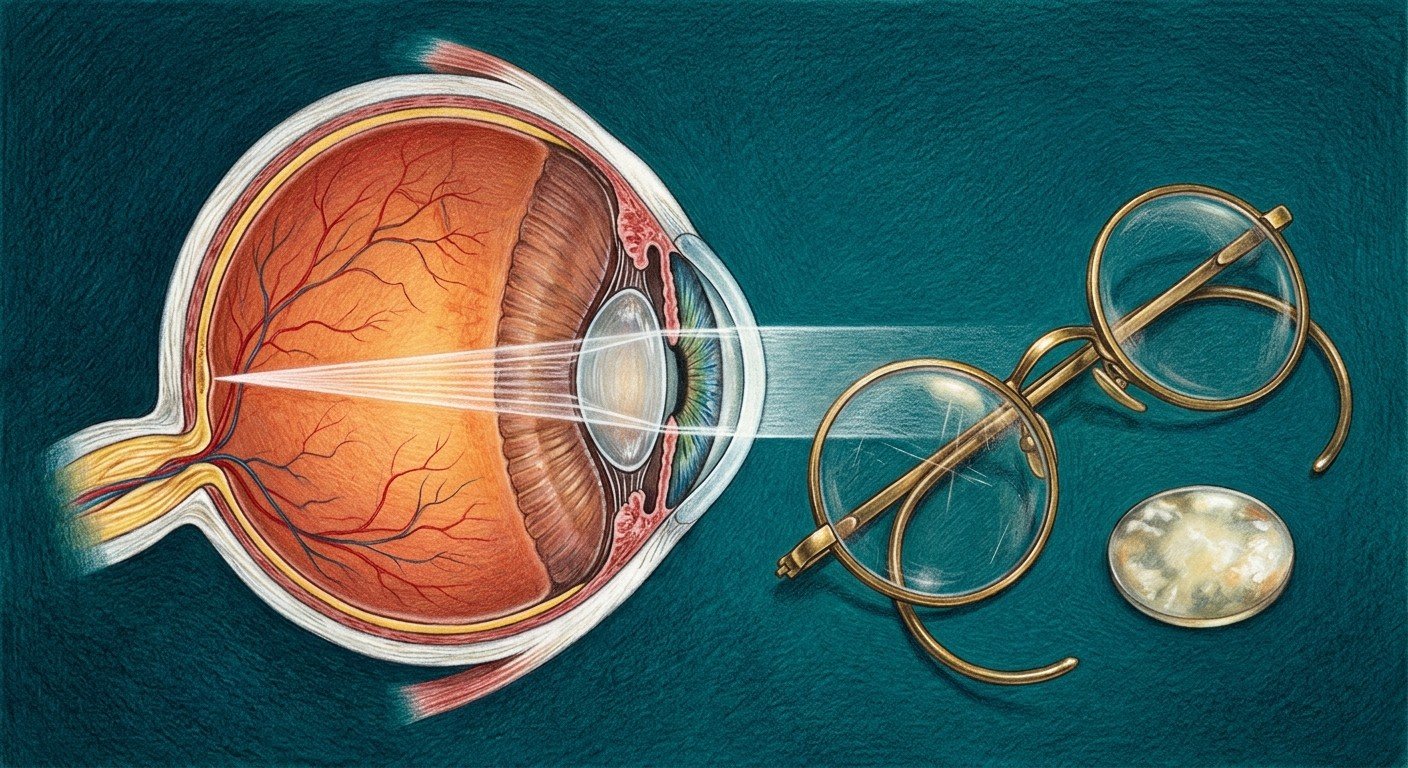
The eye works a little like a camera. Its front surface bends incoming light so the image lands sharply at the back of the eye. In a refractive error, the eye’s shape means the light lands slightly in the wrong place, so the picture looks blurred.
Glasses or contact lenses correct most of these problems. WHO says uncorrected refractive error remains a leading cause of vision impairment in all countries, among both children and adults.
A related change comes with age. Presbyopia is the gradual loss of close focus that leads many people to reading glasses. WHO estimates that 826 million people have near vision impairment, and presbyopia is the main cause.
Cataract: a clouded lens
Inside the eye, a clear lens helps focus light. In a cataract, the lens turns cloudy, so less light gets through. It is like looking through a fogged-up window.
Surgery removes the cloudy lens and replaces it with a clear artificial one. In WHO’s estimate, cataract is the largest single cause of avoidable distance vision impairment, affecting about 94 million people. Yet around 1 in 2 people who need the surgery cannot get it.
Myth vs fact: Many people believe that losing vision is a normal part of getting older and nothing can be done. Age does raise the risk, and most people with vision impairment are over 50. But common age-linked causes, such as cataract and presbyopia, can often be corrected or treated.
Some causes work quietly, which makes them harder to catch.
Eye Diseases That Work Quietly
The other three causes on WHO’s list are eye diseases. One is diabetic retinopathy. In people with diabetes, the tiny blood vessels in the retina, the light-sensitive layer at the back of the eye, can change. These vessels can leak or bleed, which distorts vision.
The difficult part is that it often goes unnoticed until vision loss occurs, according to Canadian diabetes guidelines. WHO says early detection and timely treatment are crucial for conditions like this one. That is why clinical guidelines recommend regular eye exams for people with diabetes, although the schedule differs from person to person.
Two other diseases follow a similar pattern. Glaucoma damages the optic nerve, the cable that carries images from the eye to the brain. It usually has no symptoms at first. Age-related macular degeneration wears down the centre of the retina, which gives the sharp detail needed for reading. WHO notes that these two are more common in high-income countries. In poorer countries, untreated cataract makes up a larger share.
Related: The Hidden Financial Cost of Lifestyle Diseases Nobody Talks About
Why Do the Fixes Not Reach Everyone?
If glasses and surgery work so well, why do so many people still wait? WHO points to the availability and cost of eye care services, and to how much people know about eye conditions and how to manage them.
The gap is uneven. WHO estimates that 2 out of 3 people in low-income countries who need eyeglasses do not have them. Distance vision impairment is also estimated to be about four times more common in low- and middle-income regions than in high-income regions.
By the numbers: WHO estimates that vision impairment costs the world about US$411 billion a year in lost productivity. It estimates the cost of closing the gap in unmet need at about US$25 billion. These measure different things, but WHO says the first figure far outweighs the second.
The effects reach beyond the eye. WHO reports that children with vision impairment can reach lower levels of education. Adults can have lower rates of employment, and older adults face a higher risk of falls. So eye health is also a development issue, not only a medical one.
Short-Sightedness Is Rising Among Children
Not every trend is improving. Myopia, also called short-sightedness, makes distant objects look blurry while close ones stay clear. A large review in the British Journal of Ophthalmology found that rates among children and teenagers rose from about 24% in 1990 to nearly 36% in 2023. Roughly 1 in 3 children are now affected.
Researchers link too little time outdoors to the rise, along with other factors. A review of studies in the Journal of Global Health found that children who spent more time outdoors had about 25% lower odds of myopia. This is an association, not proof of cause. Even so, school trials report that adding outdoor time lowered new cases. Scientists are still working out why.
How Eye Care Reaches More People
Some programmes show what is possible. Trachoma is an eye infection and the leading infectious cause of blindness, according to WHO. The WHO-recommended strategy combines antibiotics, surgery for advanced cases, and measures that improve hygiene and surroundings. Between 2016 and March 2026, the number of people needing the antibiotic, hygiene and environmental parts of this strategy fell from 190.2 million to 92.0 million. By September 2026, 33 countries had been validated as having eliminated trachoma as a public health problem. That is not the same as wiping it out everywhere.
WHO’s SPECS 2030 initiative aims to reach the more than 800 million people who need help with refractive error. For people whose vision loss cannot be reversed, WHO says rehabilitation is very effective in improving daily functioning. A 2021 Lancet commission projected that, without extra investment, 1.8 billion people could be living with untreated vision loss by 2050.
What This Means for You
Avoidable vision loss is not only a distant global issue. It also shapes everyday choices.
- Some eye conditions cause no early symptoms, so a qualified eye care professional may be the only way to find them early.
- Changes in a child’s vision can affect learning, so vision checks at school or in clinics can help catch problems sooner.
- Studies link more outdoor time with a lower risk of short-sightedness in children, though this is an association.
- The gap in eye care is largely about access, so affordable glasses, surgery programmes and community screening can make a real difference.
- Rehabilitation can improve daily functioning for people living with irreversible vision loss.
Conclusion
Vision loss is called avoidable because many of its main causes have known fixes or early treatments. Glasses, cataract surgery and timely detection already protect sight wherever people can reach them. The open question is less about new science and more about who gets access.
Related: Your Smartwatch Might Be Lying About Your Sugar Levels, Warns FDA!
Common Questions About Vision Loss
Is vision impairment the same as blindness?
No. WHO describes vision impairment on a scale from mild to severe, with blindness at the most severe end.
Do screens cause vision loss?
Screen use is mainly linked to digital eye strain, a short-term discomfort such as tired or dry eyes. Screens do not appear on WHO’s list of leading causes of vision impairment.
Why do many people need reading glasses in middle age?
This is usually presbyopia. The lens inside the eye gradually stiffens with age, so close focus becomes harder. The change often becomes noticeable in middle age.
Can cataracts be treated without surgery?
A medical reference describes surgery as the only approved treatment for cataract. Many people notice better vision afterwards, although results vary from person to person.
Handy Words for Everyday Life
- 20/20 vision — A standard measure of normal sharpness of sight at a distance of 20 feet. “Hindsight is 20/20” means things look clear after the event.
- Nearsighted or short-sighted — Seeing close things clearly while far things look blurry. “Nearsighted” is the usual American word, and “short-sighted” is more common in British English, where it can also mean poor at planning ahead.
- Farsighted or long-sighted — The opposite problem, where close things are harder to see clearly. North American English says “farsighted” and British English says “long-sighted”, and both words can also mean good at planning ahead.
- 20-20-20 rule — A screen-break habit: every 20 minutes, look at something about 20 feet (roughly 6 metres) away for 20 seconds. Eye organisations recommend it, but research on how well it works is limited. It is not the same thing as 20/20 vision.
- Digital eye strain — Tired, dry or uncomfortable eyes after long screen use, also called computer vision syndrome. It is usually short-term.
- Low vision — Vision loss that regular glasses, contact lenses, medicine or surgery cannot fully correct, and that makes everyday tasks hard.
Note: We have used AI tools alongside human editors in preparing this article. This article is for general information and is not a substitute for professional advice.