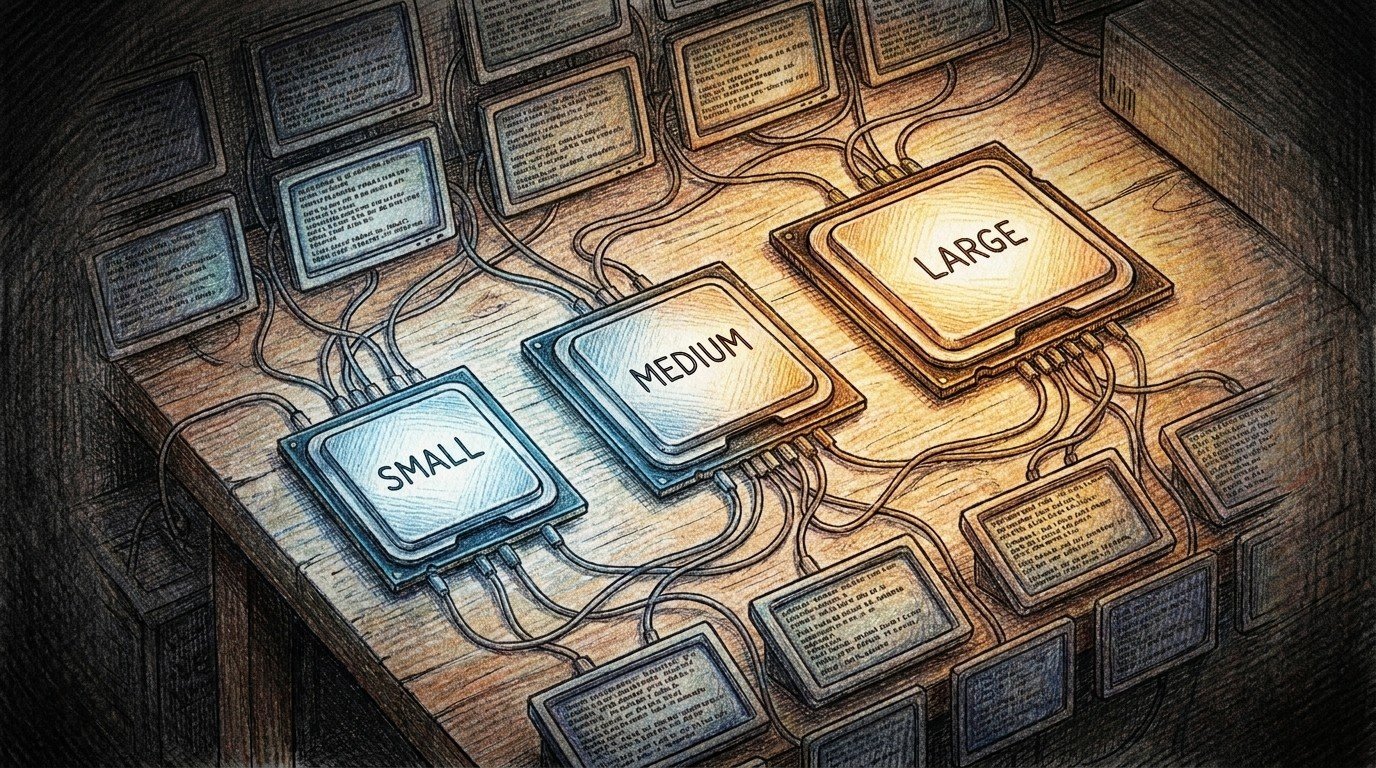
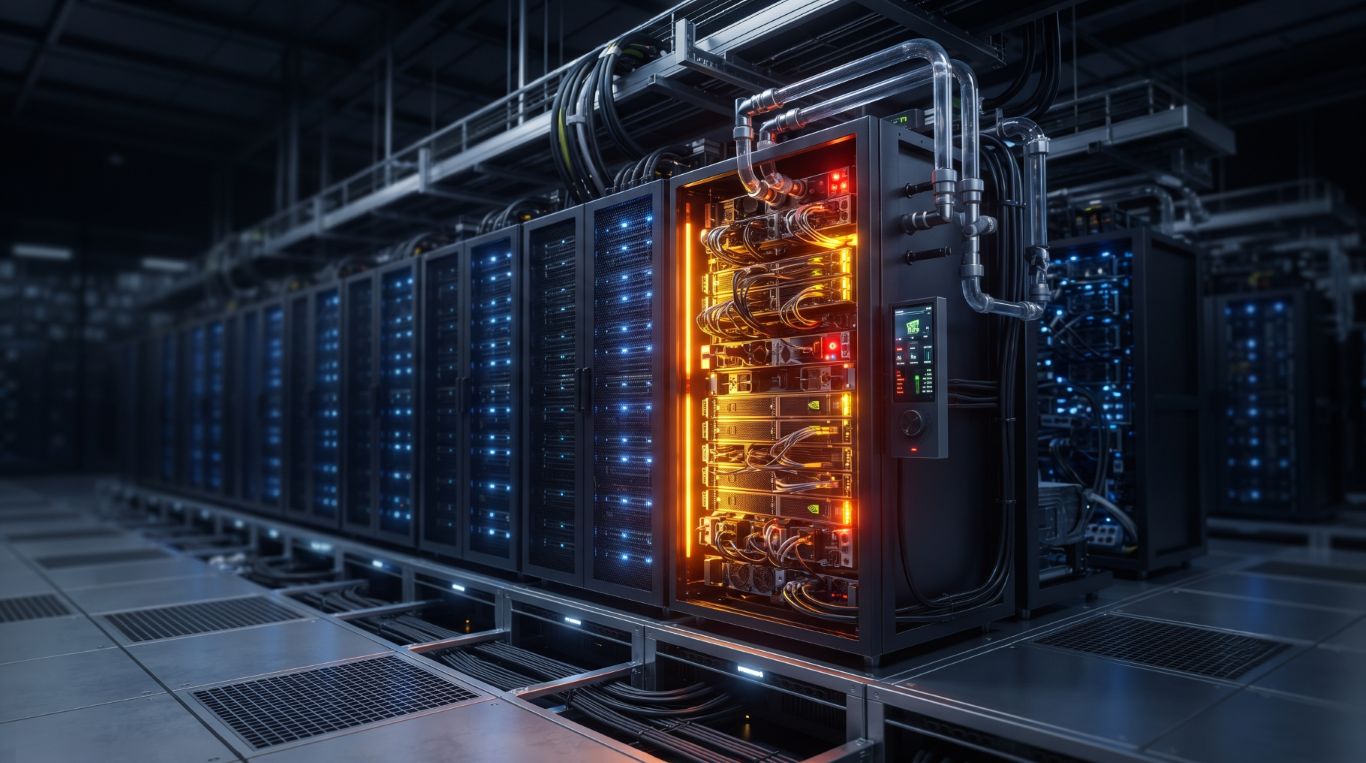
Every time you type a question into a chatbot, a wall of specialized computer chips somewhere lights up and starts crunching numbers. That’s normal. What’s not normal is how long those chips stay lit up. Regular websites and apps mostly sit around waiting for people to click something. AI power consumption is different because the chips that run AI, called GPUs, work at nearly full strength almost continuously. That single difference is why electricity use at big tech data centers is climbing much faster than the number of computers being installed would suggest. Here’s what’s actually going on inside the machines.
Key Takeaways
- AI power consumption is rising faster than server counts because GPUs run near-constant, high-intensity workloads.
- Regular web servers sit idle most of the time, while AI chips are built to stay busy nearly nonstop.
- Training a large AI model can mean months of nonstop, full-power computing across thousands of chips at once.
- Even answering everyday chatbot questions, called inference, keeps AI chips working around the clock.
- Denser, hotter AI hardware needs far more cooling power than older, traditional data center equipment.
What Makes AI Computing So Different From Normal Web Traffic
To understand AI power consumption, it helps to first understand how a normal website behaves. When you check email or scroll social media, a server, which is basically a powerful computer that stores and delivers information, does a quick burst of work and then goes quiet again.
Regular Servers Spend Most of Their Time Idle
In simple terms, most computers running everyday internet services are lazy by design. Research on typical data centers shows that ordinary servers run at only about 10% to 15% of their full capacity on average, even during business hours. The rest of the time, they’re mostly idle, waiting for the next request.
This isn’t a flaw. It’s actually smart planning. Companies build extra capacity so websites don’t crash during busy moments, like a Black Friday sale. That spare capacity just sits unused most of the day.
AI Chips Are Built to Never Stop Working
AI changes this pattern completely. The GPUs (graphics processing units) that power AI, which are chips originally designed for video game graphics but now used for AI math, are deliberately kept as busy as possible. Idle GPU time is wasted money for the companies renting them out, so schedulers pack these chips with continuous work.
Industry data backs this up. GPU servers used for AI training are reported to be operational roughly 80% of the time they’re deployed, and while they’re running, they are pushed hard rather than sitting at low power. Compare that to the 5-15% utilization of a typical web server, and you can already see why AI power consumption behaves so differently from ordinary computing.
Why GPUs Run at Full Load Almost All the Time
There are two main reasons AI chips stay so busy: training new models, and running, or “serving,” models that are already built. Both keep the electricity meter spinning.
Training Is a Marathon, Not a Sprint
Training an AI model means teaching it patterns by having it process huge amounts of text, images, or other data over and over again. Think of it like a student cramming for an exam nonstop for weeks, never closing the book.
- Large AI models can train for weeks or even months without stopping.
- Training often uses thousands of GPUs working together at the same time, not just one machine.
- Because the chips are expensive to rent or own, companies try to keep them running at close to peak performance the entire time, to avoid wasting money on idle hardware.
This is very different from an office computer that gets used a few hours a day and then powers down. A training cluster is closer to a factory assembly line that never turns off.
Inference Never Really Sleeps
Once a model is trained, it still needs power every time someone uses it. This everyday use is called inference, which simply means the AI applying what it learned to answer a new question or generate an image.
Inference workloads add up fast because millions of people are asking questions around the clock, across every time zone. Unlike a single office building that goes quiet at night, a popular AI chatbot serving a global audience has no “off hours.” Someone, somewhere, is always sending it a request.
The Hidden Reason Server Count Alone Doesn’t Explain the Power Spike
If you only look at how many new servers a company installs, you’d expect electricity use to rise at roughly the same pace. But AI power consumption is climbing much faster than server counts alone would suggest. The missing piece is power density, or how much electricity each individual piece of equipment demands.
Power Density Per Rack Has Exploded
A “rack” is basically a tall shelf packed with computer equipment in a data center. Traditional server racks used for everyday web hosting typically draw somewhere around 5 to 15 kilowatts of power, depending on the facility. In simple terms, that’s roughly what it takes to run a handful of household ovens at once.
AI racks are a different animal entirely:
- Modern AI server racks can draw 100 kilowatts or more, sometimes even beyond 140 kilowatts for the newest chip designs.
- That’s up to ten times the power draw of a standard rack, in the same physical footprint.
- Data centers built years ago often can’t handle this density without major rewiring and cooling upgrades.
This means a data center doesn’t need ten times more floor space to use ten times more electricity. It just needs to swap in AI hardware. That’s exactly why electricity demand is outpacing simple estimates based on server or building counts.
Cooling Adds Even More Load on Top
All that concentrated computing power generates enormous heat, and heat has to go somewhere. Cooling systems, which regulate temperature so chips don’t overheat and fail, are working much harder in AI-focused facilities than in older, general-purpose data centers.
- In efficient large-scale AI facilities, cooling can still account for around 7% or more of total electricity use.
- In older, less efficient enterprise data centers, cooling can eat up over 30% of total power.
- Denser AI racks often need advanced approaches like liquid cooling, since ordinary fans and air conditioning can’t remove heat fast enough.
In simple terms, running the chips is only part of the electricity bill. Keeping them cool enough to survive their own workload adds another significant layer on top.
How Much Electricity Are We Actually Talking About
The numbers behind AI power consumption are large enough to affect entire electricity grids, not just company budgets.
Global data center electricity use is estimated to have reached roughly 460 to 490 terawatt-hours in 2025, a jump of around 17% in a single year, growing far faster than overall global electricity demand. The International Energy Agency projects total data center electricity use could roughly double again to about 945 terawatt-hours by 2030, with AI-focused computing making up a fast-growing share of that total.
- A single next-generation AI data center campus can use 20 times more electricity than a typical data center consumes today.
- In some regions, data centers already account for a large share of local electricity demand, reaching nearly 80% around Dublin and about 42% around Frankfurt.
- The largest hyperscalers—including Amazon, Microsoft, Google, and Meta—are together investing hundreds of billions of dollars a year in capital expenditures, with AI infrastructure driving much of that spending.
Related: Why the World Fights for AI Chips: A Must-Read Guide to the Semiconductor Industry
What This Growing Power Demand Means for You
You don’t need to run a data center to feel the effects of rising AI power consumption. This shift is already showing up closer to home than most people realize.
Practical Takeaways
- Electricity bills near data center hubs are rising. Communities close to large AI facilities in states like Virginia have reported unusually steep jumps in monthly power bills.
- Utilities are racing to add power generation. Some tech companies are now funding their own power plants, including nuclear projects, just to guarantee enough electricity for their AI facilities.
- Efficiency is improving, but demand is growing faster. The energy cost of a single AI response is dropping quickly thanks to better chips and software, but far more people are using AI than before, so total demand keeps climbing.
- This is now a grid-level issue, not just a tech story. Regulators, utility companies, and local governments are increasingly involved in decisions about where AI data centers can be built.
Understanding why AI power consumption behaves so differently from ordinary computing helps make sense of headlines about strained power grids, new nuclear deals, and rising electricity costs near major tech hubs.
Conclusion
AI power consumption isn’t rising just because there are more computers plugged in. It’s rising because AI chips are built and used differently from ordinary servers, running near full power almost continuously instead of sitting idle most of the day. Add in denser racks and heavier cooling needs, and it’s clear why electricity use is climbing faster than server counts alone would predict. As AI keeps expanding into daily life, this energy question will only become more central to how, and where, this technology gets built.
Frequently Asked Questions
Why do AI data centers use so much more electricity than regular data centers?
AI data centers pack far more computing power into the same physical space, and that hardware runs near full capacity almost continuously, unlike traditional servers that sit mostly idle.
Is AI training or everyday AI use, like chatbots, more responsible for rising electricity demand?
Both matter. Training uses intense bursts of power over weeks or months, while everyday use, called inference, adds constant, round-the-clock demand from millions of users worldwide.
Can better technology reduce how much electricity AI needs?
Yes, the electricity cost of a single AI task is falling quickly as chips and software improve, but rapidly growing usage is outpacing those efficiency gains for now.
Will rising AI power consumption affect my home electricity bill?
It can, especially if you live near a major AI data center hub, where rising local electricity demand has already been linked to noticeably higher monthly bills for some residents.